 Photo: Max Vakhtbovych / Pexels
Lighting Is the Whole Mood in a Small Flat
Three cheap changes that make an evening feel intentional, not improvised.
The guests arrive in twenty minutes and the room looks flat. The overhead light is on, the ceiling glares, and every surface reads the same. Nothing is wrong here, and nothing feels like anything.
Lighting does most of the work in a small room, and almost none of it is about buying more fixtures. It is about layering, warmth, and giving yourself a dimmer reason to turn the big light off.
Turn the Ceiling Light Off First
If a room only has one light, that light is usually the ceiling, and the ceiling is the least flattering place to put it. It fires straight down, drops a hard shadow under every eye, and flattens the walls into a single colour.
Try an evening with the overhead light permanently off. You will not miss it as much as you expect, and the room will immediately feel larger because your eye stops reading the whole ceiling at once.
Build Three Small Pools of Light
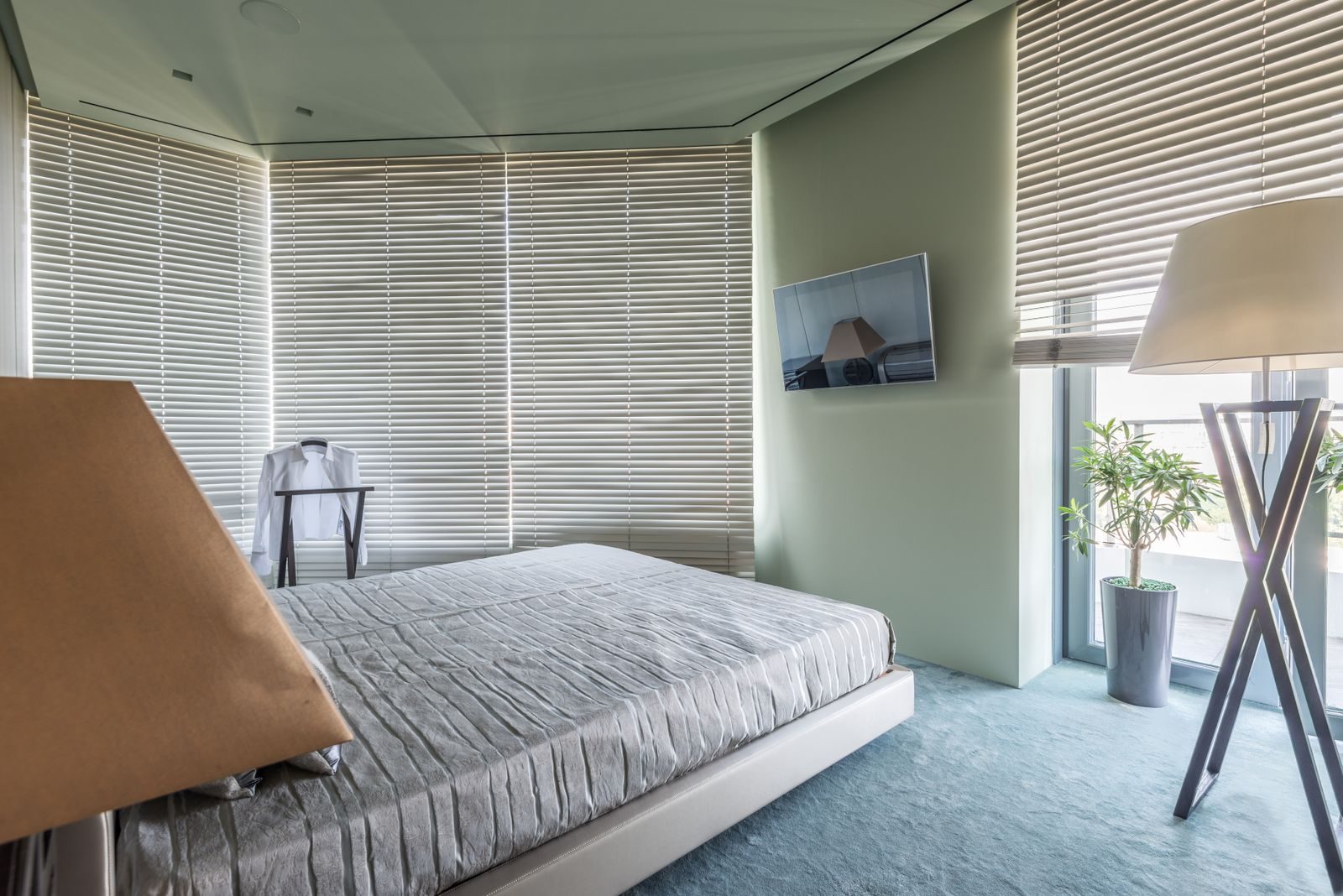
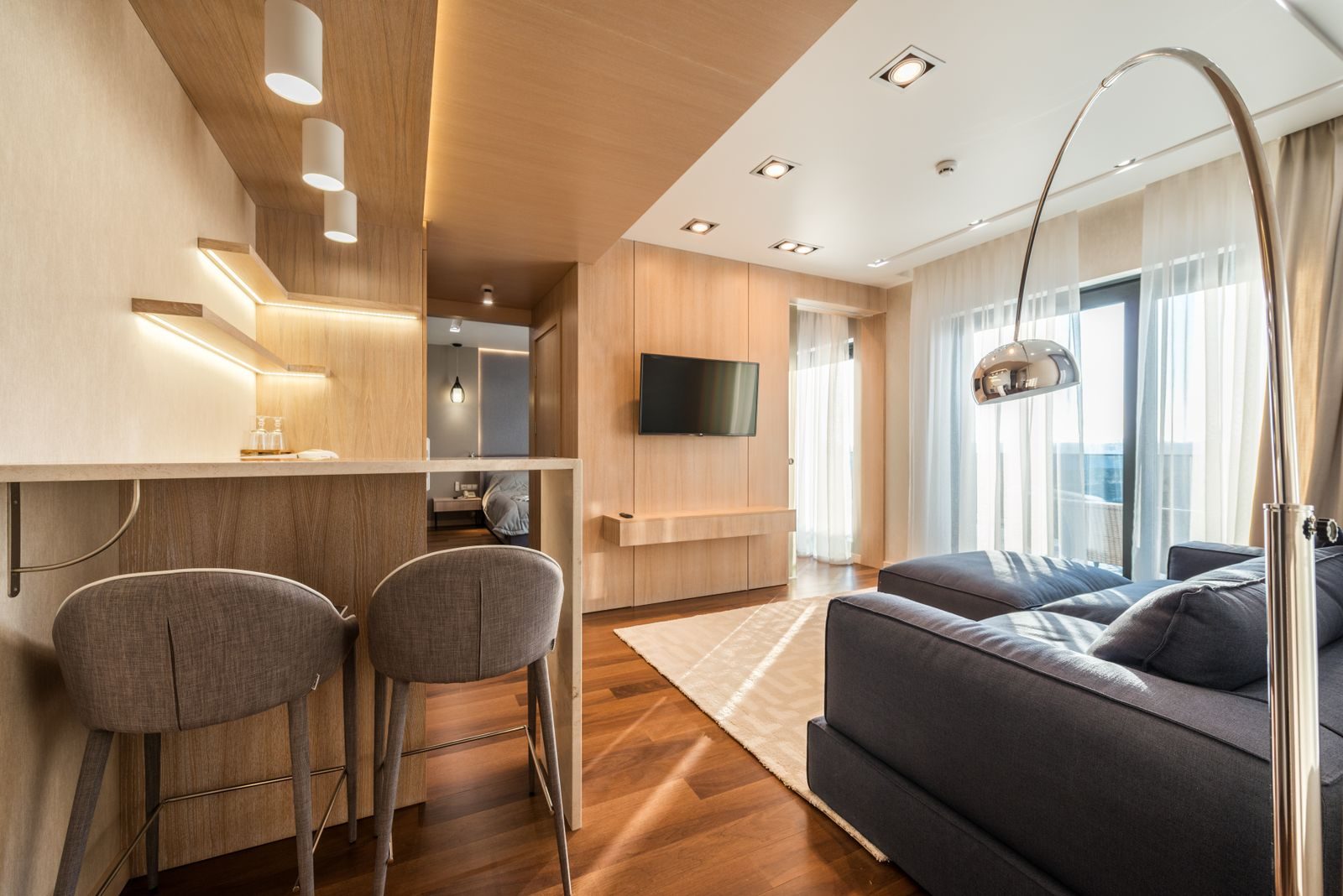
Good rooms are lit in layers: something low near the floor, something at table height, and something that grazes a wall. In a small flat you do not need three expensive lamps. You need three positions.
- Low: a floor light in the corner your eye lands on when you walk in.
- Middle: a table lamp you can reach while sitting down.
- Wall: anything that sends light sideways across plaster instead of down onto the floor.
Three small pools read as depth. One big pool reads as a waiting room.
Choose Warmth, Not Brightness
Bulb temperature changes a room more than wattage. A cool-white bulb makes even a warm sofa look clinical, while a warm bulb makes plain walls feel like evening.
If you are unsure, err warmer than feels sensible for a working light and keep the cooler bulbs for where you read or cook. Your guests will not name the difference, but they will feel it the second they walk in.
Give Yourself a Dimmer Reason
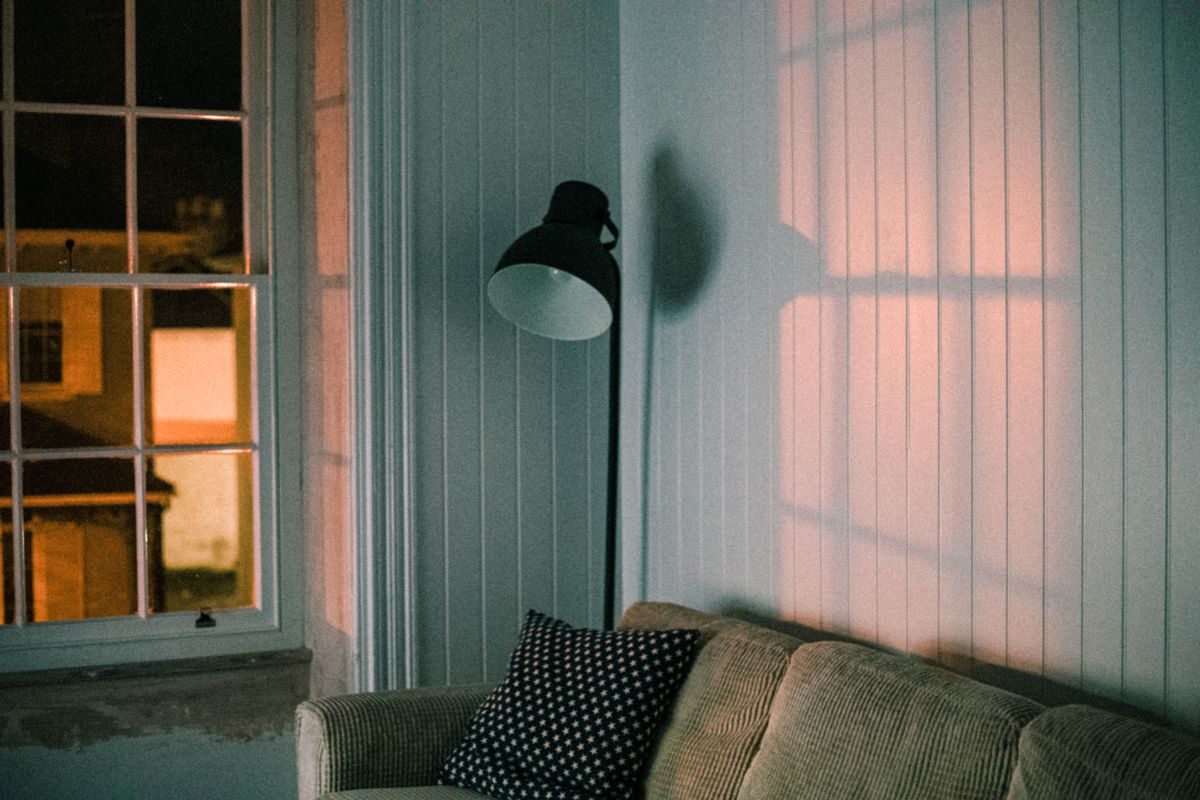
The single most useful habit in a small flat is an obvious, easy way to turn the light down as the evening goes on. That might be a dimmer, a smart bulb, or simply a lamp with a switch you can reach without standing up.
Fiddly switches kill the habit. If dimming takes two minutes and a phone, you will not do it, and you will be back under the ceiling light by dessert.
Let One Thing Stay Bright
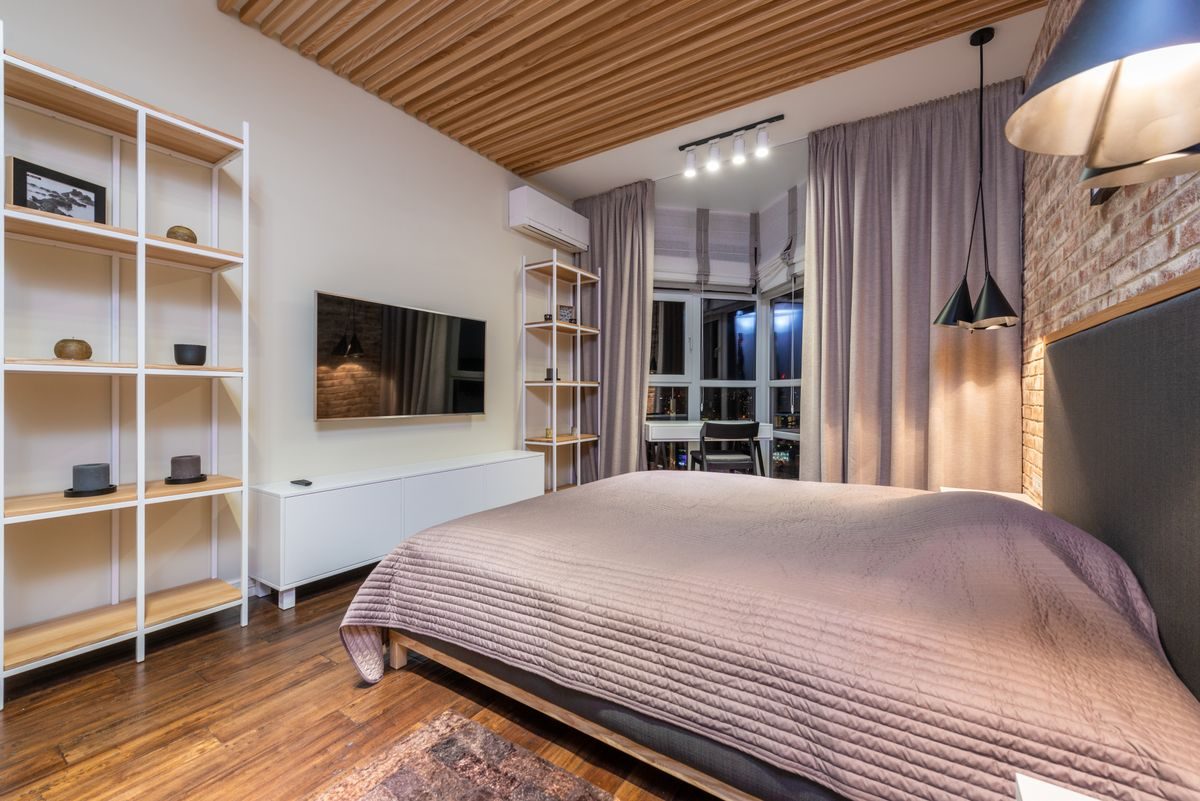
Contrast is what makes a room feel considered. If everything is dim, the room goes sleepy rather than atmospheric. Keep one detail lit - a shelf, a plant, the edge of a picture - so the eye has somewhere to rest.
That single brighter point is also what photographs well when someone inevitably pulls out a phone.
Make the Change Reversible
If you rent, treat every lighting change as temporary. Plug-in wall lights, adhesive clips, and floor lamps all leave without a trace, and they can move with you to the next place.
The goal is not a perfect room. It is a room you can reset in ten minutes when people are coming over.
Three small pools of light read as depth. One big pool reads as a waiting room.
Questions people ask
What if my flat only has one ceiling light and no sockets free?
Start with one plug-in floor lamp in the corner you notice first. It will not fix the room, but it gives you a reason to leave the ceiling off, which is most of the change.
Do smart bulbs count as a cheap option?
One or two can be, especially if they let you dim a light from your seat. Treat them as an easy dimmer rather than a whole system, and keep the ones you rely on simple.
Warm bulbs feel too yellow in my room. What now?
Move a step cooler rather than straight back to daylight. A slightly neutral warm bulb often reads as pleasant where the warmest one reads as murky.